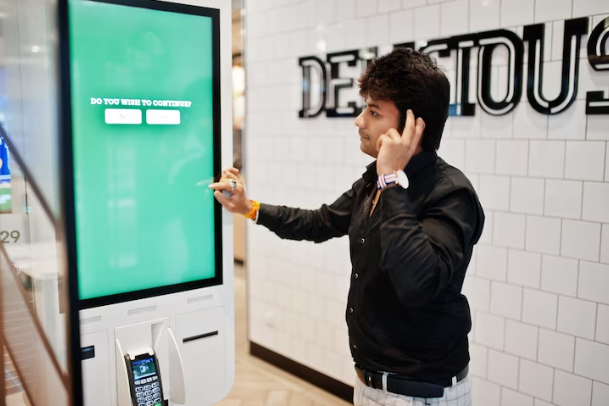
In the ever-evolving dining landscape, self-ordering kiosks transform experiences in restaurants, cafes, bars, fast food chains, or sushi trains. These interactive terminals epitomize the future of dining, where convenience, customization, and efficiency reign supreme.
The impact and potential of self-ordering kiosks offer a glimpse into a world where customers take control of their dining experience. From enhancing customer satisfaction to streamlining operations, self-ordering kiosks represent a significant shift in dining, ushering in an exciting era of innovation and convenience. Here are the crucial functionalities of an efficient self-ordering kiosk.
1. Integrating the Ordering Process with Buzzer Functionality
Integrating the ordering process with buzzer functionality is a unique feature of self-ordering kiosks that enhances the overall dining experience. The outlet provides customers with a unique identifier when they place an order.
The buzzer alerts the customers when their order is ready. The buzzer eliminates the need for customers to anxiously wait near the pickup counter, freeing them to move around or engage in other activities while their food is under preparation.
When the order is ready, the buzzer vibrates, beeps, or flashes, notifying the customer to collect their meal. By reducing wait times and providing flexibility, this feature of a self ordering kiosk ensures a seamless and convenient dining experience, enhancing customer satisfaction and streamlining point-of-sale operations.
2. Multi-Language Support
Multi-Language Support is a useful functionality of self-ordering kiosks to cater to diverse customer bases. The feature lets customers easily navigate the kiosk interface at the point of sales and place orders in their preferred language. Restaurants can provide a more inclusive and accessible dining experience by breaking language barriers and accommodating individuals who may not be fluent in the local language.
The best settings for multi-language support would involve a selection of commonly spoken languages in the region or customizable language options. This functionality helps attract international tourists and ensures that all customers can comfortably interact with the self-ordering kiosk, enhancing their overall dining experience.
3. Allergen and Dietary Restriction Notifications
Allergen and Dietary Restriction Notifications are crucial features in self-ordering kiosks, particularly for customers with specific dietary concerns. The functionality lets customers input their dietary needs or allergies into the kiosk. The self-ordering kiosk then displays warnings or suggests suitable menu options based on their requirements, ensuring they make informed choices and feel confident in the safety and suitability of their selected meals.
The feature eliminates the risk of accidentally consuming allergens or incompatible ingredients, enhancing customer safety and satisfaction. For example, a customer with a gluten intolerance can input this restriction at the point of sale, and the kiosk will display gluten-free options, allowing them to choose a suitable meal that meets their dietary needs confidently.
4. Integration with Loyalty Programs
Integration with loyalty programs is of significant importance, especially in self-ordering kiosks. By seamlessly integrating with restaurant loyalty programs, self-ordering kiosks enable customers to access their loyalty accounts directly from the kiosk. The functionality allows customers to view their accumulated points, redeem rewards, and earn additional benefits by placing orders through the kiosk.
The integration enhances customer engagement, incentivizes repeat visits, and fosters a stronger connection between the restaurant and its customers. By rewarding loyal patrons and offering personalized promotions through loyalty program integration, restaurants can build customer loyalty, increase customer retention, and enhance business growth.
5. Quick Reordering and Enhanced Payment Process
Quick reordering and an enhanced payment process is a valuable feature of self-ordering kiosks that ensures efficiency and convenience for customers. With this functionality, customers can access their order history and quickly reorder their favourite items with just a few taps on the kiosk screen. Also, self-ordering kiosks streamline the payment process by offering various secure and convenient payment options, such as credit cards, mobile payments, or digital wallets.
That saves time for customers, eliminates the need for cash transactions, and enhances the ordering experience. A good example is a self-ordering kiosk system that integrates with mobile payment apps and provides a user-friendly interface for quick reorder and seamless payment transactions, empowering customers with a hassle-free dining experience.
Takeaway
Embracing a reliable and affordable self-ordering kiosk system is crucial for restaurants seeking to enhance their dining experience, especially at the point of sale. The future of dining lies in the convenience, efficiency, and personalization that self-ordering kiosks offer.
These systems empower businesses and customers with features such as quick reordering, enhanced payment processes, multi-language support, allergen notifications, loyalty program integration, and more. By investing in a robust self-ordering kiosk solution, restaurants can stay ahead of the curve, attract new customers, boost operational efficiency, and ultimately thrive in the evolving landscape of the dining industry.