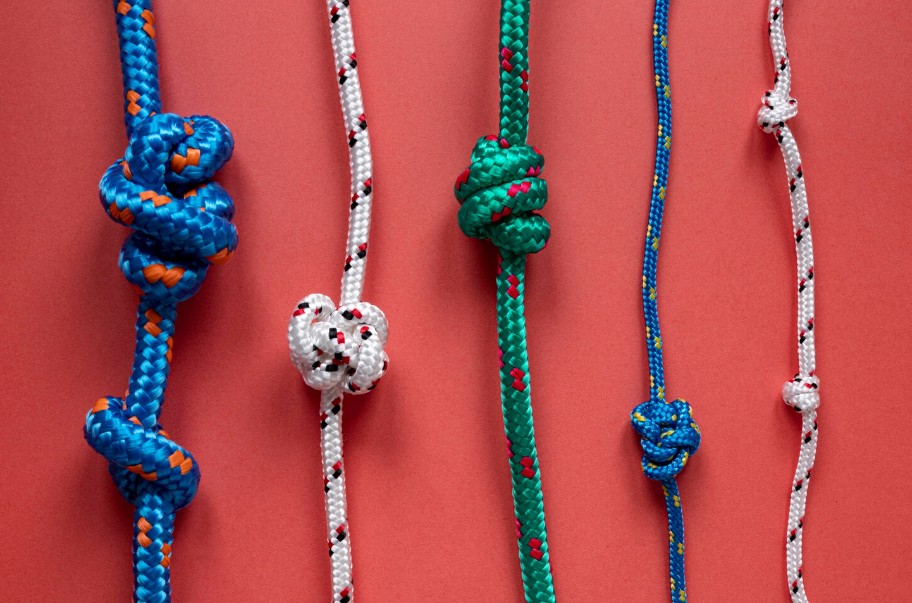
Knots are among the oldest and most helpful inventions of humanity, silently keeping together sailing ships, shoelaces, and surgical sutures. You may like camping, boating, fishing, climbing, or you may just need to get a load in the back of a truck, but you need to know that a few reliable knots can save you time, frustration, and sometimes even your life. The most advantageous thing is that you do not have to memorize hundreds of them. A few, carefully selected, general-purpose types of knots will deal with almost any circumstance life presents you with.
We have not yet reached the knots themselves, but it is good to know that they are divided into a few fundamental families. Bends are used to connect two different ropes. Hitches are used to tie a rope to a post or a ring. Loops are a circle that is either fixed or adjustable. And stopper knots add bulk to the end of a line to prevent it slipping through a hole. Understanding these families will help a lot in selecting the appropriate knot to use in any task.
1. The Square Knot (Reef Knot)
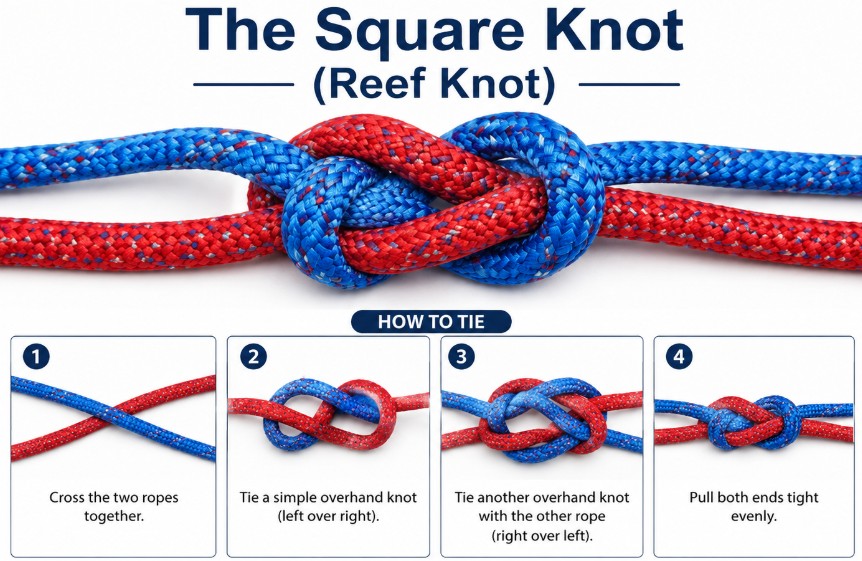
The square knot is a knot that people learn first and rightly so. It is used to connect two ropes of the same thickness or to hold a bundle together and is often used in first aid to tie bandages. To tie it, cross right over left, then left over right. It is fast and level, but note: it is not sturdy enough to carry heavy loads or perform life-threatening duties, as it may slip or even capsize. Imagine a light-duty binding knot instead of a load-bearing one.
2. The Bowline
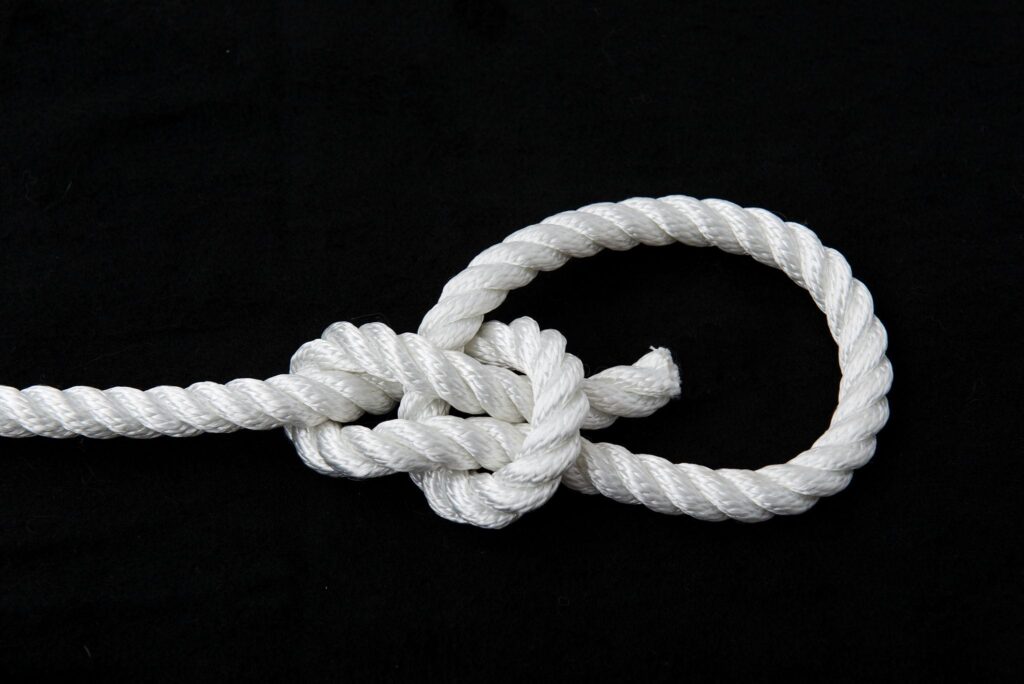
Nicknamed the “king of knots,” the bowline creates a fixed loop at the end of a rope that won’t slip or tighten under load, yet remains easy to untie afterward. This makes it invaluable for rescue work, sailing, and securing a line around a post or through a ring. A time-tested memory trick, the rabbit comes out of the hole, around the tree, and back down the hole, is used to assist beginners in remembering the order. This is one that every outdoors enthusiast must remember.
3. The Clove Hitch
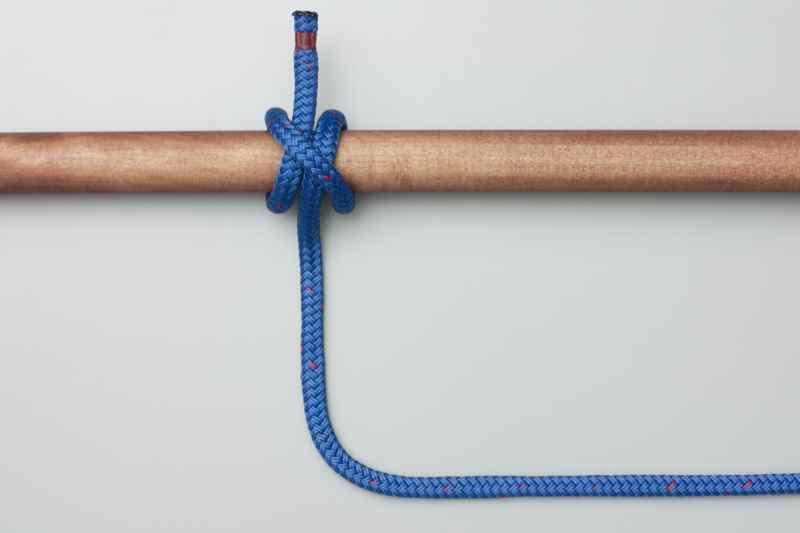
The clove hitch is a quick, adaptable method of attaching a rope to a pole, rail or post. Sailors depend on it to fasten fenders and campers use it to begin and end lashings. It is made up of two loops around an object, the working end of which is tucked under the second. Its immense benefit is that it is fast and can be adjusted, but it may become loose when the object it is attached to is rotated, so it should be used in conjunction with a backup knot in critical situations.
4. The Sheet Bend
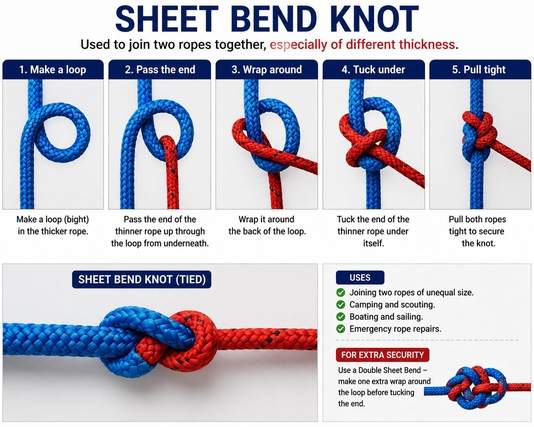
The sheet bend is the solution when you have to combine two ropes of varying thicknesses – something that the square knot does not do well. It is extensively applied in lengthening ropes, creating nets, and binding lines on boats. The fatter rope is a bight, and the finer rope passes through it and around it. To provide additional security when using slippery lines or heavily loaded lines, you may tie a second wrap to the sheet.
5. The Figure-Eight Knot
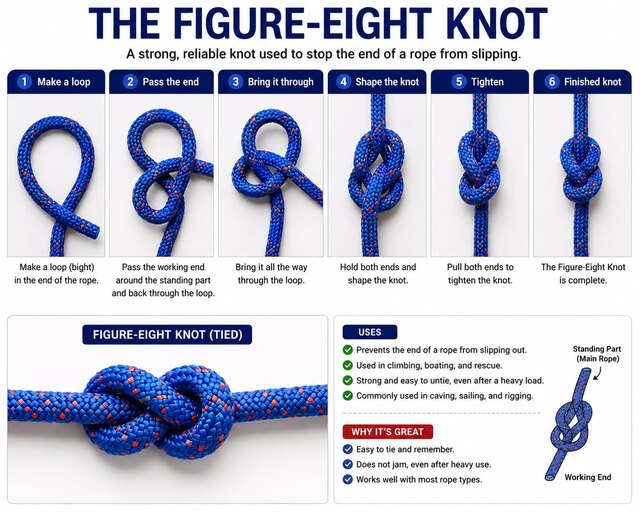
The figure-eight is a knot that is used to stop a rope sliding through a hole, pulley, or a belay device. It is particularly popular in rock climbing and sailing, as it is strong, can be visually inspected, and can be untied easily, even when it has carried weight. As its name suggests, the rope traces the shape of the number eight. Climbers often use the related “figure-eight follow-through” to tie into a harness safely.
6. Two Half Hitches
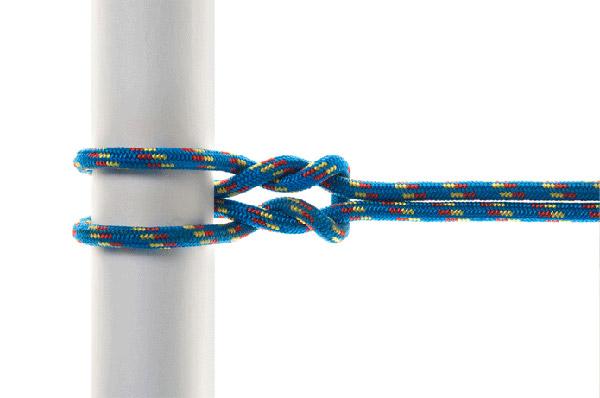
This is a dependable knot that holds a rope to a stationary object like a tree, ring, or dock cleat. It is just two easy overhand knots tied in sequence around the standing line, and forms a strong grip that can hold far below constant tension. Two half hitches are great to hang hammocks, to tie tarps or to moor a small boat, and are not too difficult to undo when you are through.
7. The Taut-Line Hitch
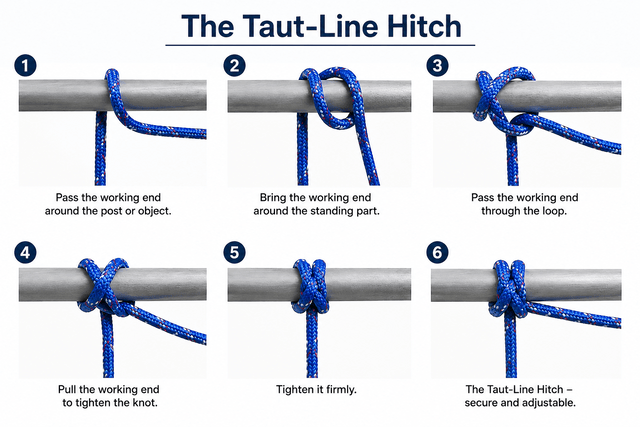
The taut-line hitch will be of value to you, should you ever have to pitch a tent. It is a flexible loop that clamps under tension and glides easily when you loosen it, and is ideal in guy lines and adjustable tie-downs. Slide it to tighten or loosen your tent line one way or the other, then it clips firmly into place when weight is applied. It’s one of the most practical knots for any camper.
8. The Fisherman’s Knot
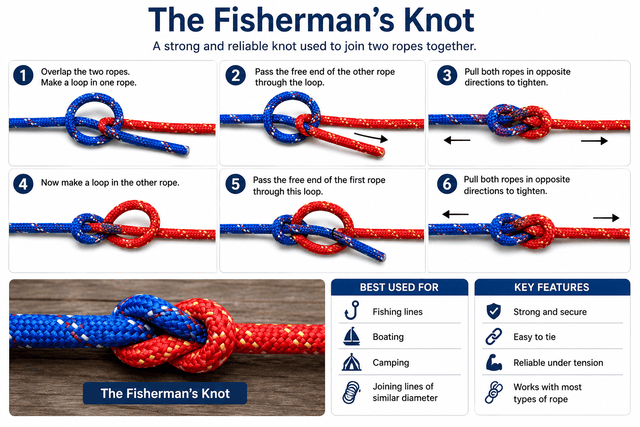
This knot, as the name suggests, is popular with the angler in joining two lengths of fishing line or thin cord. It is made by knotting an overhand knot in each line round the other, and then pulling them together so that they squeeze. It is powerful and compact and is particularly effective with slippery monofilament. The knot version that is better or blood knot is even more holding.
Tips for Learning Knots
The trick to these knots is practice. Train on a length of paracord until you can tie all of them without glancing at your hands – muscle memory is what matters when it is cold, wet, or an emergency. Begin with two or three that suit your interests, and build up your repertoire over time. You can remember which knot to grab by learning the intention behind the knot, and not just the steps. There are numerous free video tutorials and knot-tying applications that can teach you the moves.
Final Thoughts
You do not have to be a sailor or a survivalist to find it useful to know some good knots. These popular types of knots encompass the greatest number of daily and outdoor activities, such as tying down equipment and holding a tent tight in the wind. Learn this basic set, know when to apply which and you will be ready to face nearly anything. When you feel at ease, you can venture into more specialized knots to fit specific activities, but this base will be helpful throughout your life.
Read more post here.