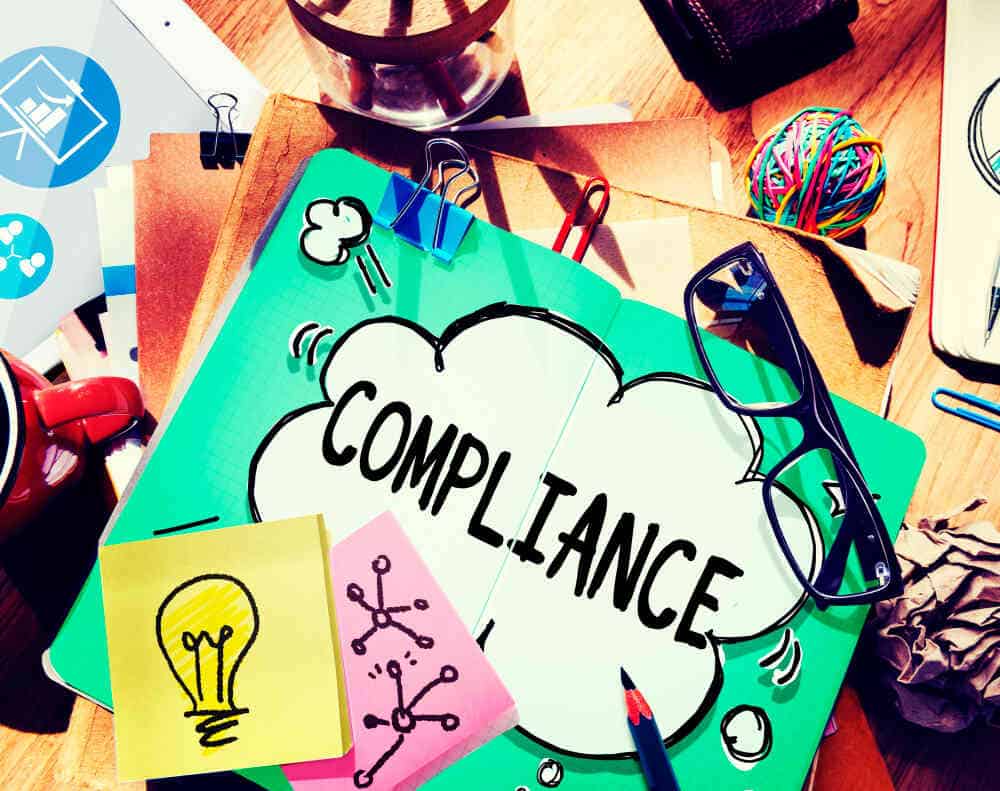
Most people think of compliance as piles of paperwork, a once-a-year audit or the legal team’s issue behind closed doors. While that’s expected and nothing wrong with it, the reality is much more of a movement. For organizations that truly get it right, compliance is not a one-time event, but instead, an ever-present culture across departments leveraged through the little, consistent actions that over time, make all the difference.
It’s this dichotomy between expectation and reality that gets so many organizations in trouble.
The Systems That Make It Work
Here’s the thing about organizations that do it all well: they’re not doing anything better than everyone else; they’re doing it more consistently.
And at scale, consistency requires the proper systems to make it work. That’s why organizations that implement compliance programs across departments and locations turn to dedicated Compliance Software for the sake of connectivity. Policy acknowledgments, disclosures, workflow approvals and audit trails exist in one place instead of multiple email threads or shared drives.
When the foundation is concrete, the day-to-day management is much easier to handle. Without it, cracks form in the pavement, and those cracks often aren’t discovered until someone has a question they should have never had in the first place.
What Actually Happens Every Day
Good compliance management on a day-to-day basis generally involves a few common themes that aren’t always talked about: policy distribution and acknowledgment tracking, conflict of interest disclosures, incident reporting and workflow approvals.
For example, policy management is not as easy as writing a policy and uploading it to the intranet. Someone has to ensure all relevant employees saw it, acknowledged they’ve read it and keep a record of said acknowledgment. Then, when a policy is updated—and that’s more common than people realize, the whole process starts anew. Scaling this task manually to an organization of fifty people becomes genuinely overwhelming; imagine a hospital system or a financial services firm.
The same goes for conflict-of-interest disclosures. Employees must often disclose relationships/interests that could impede their judgment at work. However, collecting those disclosures, reviewing them and following up on anything flagged requires coordination. If it’s not structured, disclosures are turned in inconsistently and at different times; reviews are missed and organizations are without records when they need them most.
The Importance of Workflows and Accountability
What separates compliance programs that run well from those that flounder is accountability. There is an air of responsibility where compliance is ingrained in operations. There are defined workflows for common compliance functions, who submits what, who reviews it, who signs off and what happens when something misses the mark?
This is where automated workflows provide value. When someone new onboards, there’s a workflow. When policies are revised, there’s a workflow. When a conflict-of-interest disclosure is flagged for further review, there’s a workflow. These are not complicated ideas; however, without systems to manage them effectively, these touchpoints rely on the follies of human memory, and that’s where accountability quietly crumbles.
Compliance teams need not be the largest teams to be the most successful. They must establish a system of processes to keep the wheels turning without manual intervention after every interaction.
Tracking and Reporting – The Part That Protects You
It’s common knowledge that documentation matters; however, what’s not so obvious is how effective documentation can either save or sink an organization.
Regulators and auditors want to know more than what’s currently implemented as a policy, they want to know who’s acknowledged it, when’s it’s been acknowledged and what’s happened since then. They want to know how compliance exists in practice, not just theory, which means tracked completions, dated acknowledgments, established faces responsible for governing practices, and follow-up on anything that’s flagged.
Those organizations that maintain consistent documentation tend to sail through audits better than those scramble after the fact, or worse, without documentation at all. Furthermore, documented resources boast internal value as they show leadership where programs are working well or where attention is needed.
Building Something That Lasts
Ultimately good compliance management comes down to creating a program that functions as second nature versus in response to external pressure. When employees know what to expect, are given guided processes and know there’s a comprehensive system documenting completion and follow-up for some accountability along the way, compliance no longer feels like an imposition but instead acceptable work culture.
This doesn’t happen overnight, but it can be done. Organizations that achieve this together have leadership who champions compliance efforts, clear accountability and systems in place that ease such an automated burden enough to ensure it’s consistently done.
Compliance day-to-day may not be glamorous, but it’s what’s going to keep organizations out of trouble, which maintains public trust with regulators, and ultimately supports a workplace climate where people know the rules and feel confident working within them. That’s worth getting right.
Find out more on our blog.